- Benzinga Advisor
- Posts
- Alternatives In 401(k)s: A Fiduciary Shift, Not Just A Menu Change
Alternatives In 401(k)s: A Fiduciary Shift, Not Just A Menu Change
Plus, the latest in market news.


Happy Sunday, and welcome to Benzinga’s financial advisor newsletter.
Today we’re talking about savings and investment strategy and the potential shift that could reshape portfolios going forward. Despite recent losses, crypto continues to attract capital, and regulators are considering a move that could bring alternatives into 401(k)s. Read on for all the details.
Plus, a look at all the top stories and market activity from this past week.
Advisor Spotlight: If you would like your company to be featured in our upcoming Advisor Spotlight, click here to send us an email.
INDUSTRY CHATTER

It’s been a volatile start to the year for cryptocurrency. Bitcoin fell nearly 25% in the first quarter — its weakest start since 2018 — yet investor interest hasn’t disappeared as U.S. spot Bitcoin ETFs still drew more than $1.3 billion in net inflows last month, snapping a multi-month streak of outflows.
That tension — between volatility and continued demand — is exactly the backdrop the Department of Labor faces in a proposal that could bring assets like crypto, private equity, private credit, and real estate into 401(k) plans.
For advisors, the proposal is not just expanded access, but a shift in fiduciary expectations. Historically, alternatives have been largely absent from plans due to litigation risk. Plans operate under intense scrutiny, and concerns around fees, liquidity, and participant understanding have kept these investments on the sidelines.
The proposed rule attempts to change that through a new safe harbor framework. If fiduciaries follow a defined process, they receive greater protection from lawsuits. That process centers on six factors: performance, fees, liquidity, valuation, benchmarks, and complexity.
In practice, that becomes the new due diligence standard. Each factor reflects a familiar challenge. Higher and less transparent fees. Illiquidity in private markets. Subjective or infrequent valuations. Limited benchmarking. And, perhaps most importantly, complexity that can outpace participant understanding.
The key point: the rule doesn’t reduce these risks, it requires them to be explicitly evaluated and documented. For advisors, this shifts the work from access to oversight.
Due diligence will need to be more structured. It’s not just about identifying a compelling opportunity, but demonstrating how it holds up across all six factors of fiduciary review.
At the same time, participant behavior becomes harder to ignore. When an alternative shows up inside a 401(k), it carries an implied endorsement. That may lead to increased allocations — particularly among younger investors already comfortable with assets like crypto — regardless of whether it fits a long-term retirement strategy.
Which makes the advisor’s role more interpretive. If this proposal moves forward, 401(k)s may start to look more like institutional portfolios. But with that comes a familiar challenge: more options doesn’t simplify decisions, it raises the stakes on getting them right.
SPONSORED CONTENT

Ascent Solar Technologies Inc. (ASTI), the thin-film PV maker, is setting its sights on the marine market as demand increases for green boats. Solar panels, particularly the ones Ascent Solar makes, are driving the market because they are flexible, lightweight and high-efficiency, work well in extreme conditions and can be installed on curved surfaces like decks and sails. Ascent has already proven its solar panels can withstand harsh conditions and is working with an ocean monitoring company and Georgia Institute of Technology to further marine applications powered by solar. It's a big business, projected to reach $5 billion by 2035, growing at a CAGR of 13.1% from now until then. To learn more about Ascent Solar, click here.
This is a paid ad. Please see 17b disclosure here for more information.

It took a shortened week and an unexpected diplomatic signal to finally snap Wall Street’s worst losing streak since 2022.
The S&P 500 – as tracked by the SPDR S&P 500 ETF Trust (SPY) – posted its strongest weekly gain since late November, snapping a five-week slide in a holiday-shortened week that ended Thursday, with markets closed for Good Friday.
The relief was real — if incomplete.

From Ceasefire Hopes To ‘Stone Age’ Threats: Trump's Message Whipsaws Markets
The catalyst arrived Tuesday, March 31, when President Donald Trump declared that U.S. and Iranian negotiators had shared “good and productive conversations,” adding that a ceasefire agreement could come “very soon.”
The S&P 500 surged 3% — its best single session in nearly a year. Oil fell toward $85 a barrel. For one day, the market priced in a world where the Strait of Hormuz reopens.
The euphoria didn’t last for long.
In a televised address Wednesday night, Trump said Iran must formally accept U.S. terms before any agreement would be recognized, reaffirming an April 6 deadline. He also warned that Iranian infrastructure would be hit “extremely hard” over the next two to three weeks, threatening to push Tehran back to the “Stone Ages.”
The optimism that brought crude below $100 quickly reversed, while U.S. stocks cooled but didn’t collapse.
Oil Closes The Week At June 2022 Levels As Supply Shock Fears Intensify
West Texas Intermediate crude – as tracked by the United States Oil Fund (USO) – closed the week above $110 a barrel — its highest closing price since June 2022.

More striking than the level was a structural shift: for the first time since 2009, WTI is trading at a premium of more than $3 over Brent crude, inverting a relationship that held for more than a decade.
Analysts attribute the flip to U.S. refiners ramping demand at the start of the spring driving season, drawing on domestic crude that international buyers cannot easily access while the Strait remains closed.
Gold, which had collapsed 11.5% in March — its worst monthly performance since October 2008 — rebounded 3.7% this week. The catalyst was a shift in Fed expectations.
Speaking at Harvard University on Tuesday, Fed Chair Jerome Powell said monetary policy is in “a good place for us to wait and see how that turns out” — language the market read as a signal that the Fed intends to look through the oil shock rather than hike into it.
Nike Sinks To 2014 Lows As War Shock Hits Consumer Outlook
The war’s costs and uncertainties are beginning to show up in corporate earnings.
Nike (NKE) beat estimates Tuesday but buried alarming guidance inside the report: China sales expected to fall 20% year-over-year, with management explicitly citing “unplanned volatility due to disruption in the Middle East and rising oil prices.”
The stock fell 15% Wednesday and closed Thursday at its lowest level since October 2014.
For Michigan-based stocks, the week offered little comfort. Ford (F) and General Motors (GM) are both down 12.6% year-to-date, hovering near their 2026 lows.

BENZINGA NEWSLETTER SPOTLIGHT
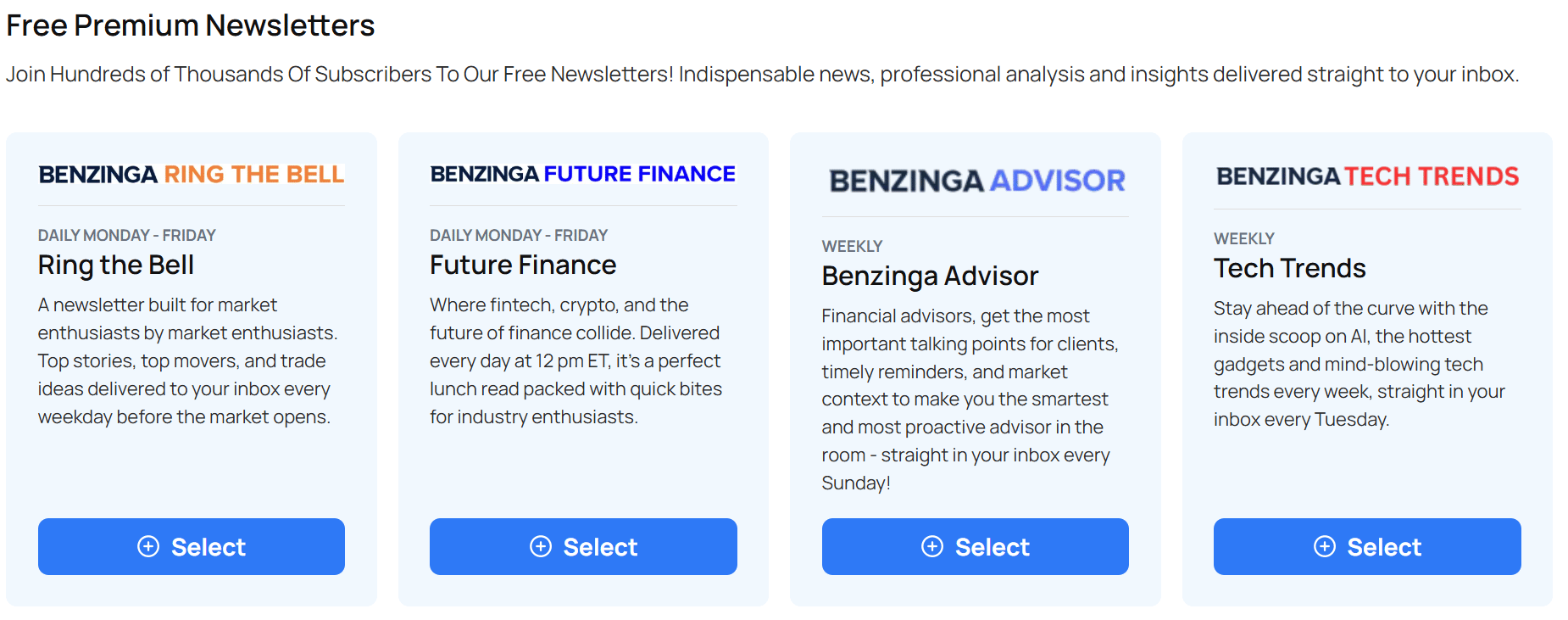
Want more of the news and insights you love? Join hundreds of thousands of readers and explore our other free newsletters for market updates, expert insights, and must-read stories delivered straight to your inbox.
Ring The Bell: Created for market enthusiasts by market enthusiasts, this twice-daily newsletter delivers top stories, fast movers, and hot trade ideas straight to your inbox. Sign up today.
Future Finance: Where fintech, crypto, and the future of finance collide. Future Finance is a perfect lunch read packed with quick bites for industry enthusiasts. Subscribe here.
Tech Trends: Get the inside scoop on AI, the hottest gadgets, and mind-blowing tech trends. Join today.
THE WEEK AHEAD

Economic Data
Monday: ISM Services
Tuesday: Consumer credit, Durable-goods, Fed speeches (Goolsbee, Jefferson)
Wednesday: FOMC meeting minutes, Crude oil inventories
Thursday: Initial jobless claims, PCE, GDP, Wholesale inventories
Friday: Factory orders, CPI, Consumer sentiment, Rig count
Earnings
Click here for the full calendar of economic data and earnings reports.
Reminder, if you would like to be featured in our upcoming Advisor Spotlight and showcase your business, click here to send us an email.
BEFORE YOU GO
Were you forwarded this email? Click here to subscribe.
And be sure to check out our other newsletters:
Ring The Bell: Created for market enthusiasts by market enthusiasts, this twice-daily newsletter delivers top stories, fast movers, and hot trade ideas straight to your inbox. Subscribe here.
Future Finance: Where fintech, crypto, and the future of finance collide. Future Finance is a perfect lunch read packed with quick bites for industry enthusiasts. Subscribe here.
Tech Trends: Get the inside scoop on AI, the hottest gadgets, and mind-blowing tech trends. Subscribe here.