- Benzinga Advisor
- Posts
- Americans’ Financial Literacy Falls To All-Time Low
Americans’ Financial Literacy Falls To All-Time Low
Plus, the latest in market news.

Happy Sunday, and welcome to Benzinga’s financial advisor newsletter.
Today we're discussing financial literacy. Despite having more access to financial information than ever before, Americans are feeling less equipped to make important financial decisions. And the stats back it up as financial literacy has dropped to the lowest level ever recorded. Read on to learn what's behind the decline and why it matters.
Plus, a look at all the top stories and market activity from this past week.
Advisor Spotlight: If you would like your company to be featured in our upcoming Advisor Spotlight, click here to send us an email.
INDUSTRY CHATTER

Last week, we discussed Gallup’s finding that affordability — for the fifth year in a row — remains Americans’ top financial concern and that a growing number of households feel their financial situation is deteriorating.
Inflation and rising costs are certainly part of the story, but they may not be the entire reason. A new study from TIAA Institute suggests another factor is contributing to that growing anxiety: Americans are becoming less financially literate.
The results showed that out of 28 questions, just 47% answered them correctly — the lowest level ever recorded since the survey began more than a decade ago. Even more notable, one-quarter of adults now fall into the category of very low financial literacy.
As financial decisions grow more complex and information becomes more abundant, many households may be finding it harder to evaluate risks and distinguish good advice from bad.
One of the study’s most revealing findings showed that understanding risk remains the weakest area across all generations. Only 36% of risk-related questions were answered correctly, and performance improves surprisingly little with age.
Gen Z recorded the lowest financial literacy scores of any generation, while Baby Boomers scored the highest. Younger adults are entering financial markets during a period when information is abundant, advice is everywhere, and major life milestones — from homeownership to retirement planning — often feel further out of reach than they did for previous generations.
For advisors, one takeaway is to stop assuming clients understand the fundamentals. Concepts like risk, Medicare, withdrawal strategies, and market volatility may seem basic within the profession, but the data suggests many clients are operating with significant knowledge gaps. Taking a few extra minutes to confirm understanding today may prevent costly mistakes and unnecessary anxiety. Advisors who can simplify complex topics and provide clarity is just as important as helping them select the right investments.
WEEKLY MARKET RECAP

It was a volatile week on Wall Street, with the final two sessions delivering jolts to an AI-driven rally that had looked unstoppable.
On Friday, the Nasdaq 100 — tracked by the Invesco QQQ Trust (QQQ) — recorded its worst drop since April 2025’s ‘Liberation Day’ selloff sparked by Trump-related tariffs, while the S&P 500 — tracked by the SPDR S&P 500 ETF Trust (SPY) — snapped nine straight weeks of gains, its longest streak since 2023.
The risk sentiment sank amid two key catalysts.
First came Broadcom (AVGO). The chipmaker giant beat expectations last quarter and guided next-quarter sales to $29.4 billion, above the Street’s $28.6 billion.
Yet CEO Hock Tan kept full-year Al semiconductor guidance unchanged at “in excess of $100 billion,” puncturing sky-high expectations.
Near-perfect results were not enough for Wall Street, with the stock collapsing 12.6% Thursday and over 7% on Friday, dragging the entire Al infrastructure complex with it.
The semiconductor sector – tracked via the iShares Semiconductor ETF (SOXX) – tumbled more than 10% between Thursday and Friday, on track for its worst two-day drop since April 2025’s tariff shock.
Chart: Broadcom’s Selloff Drag Semiconductor Sector Lower

Hot Jobs Data Sparks Rate-Hike Fears
Then came the May jobs report.
Payrolls rose 172,000 versus an 85,000 consensus, with March and April revised up by a combined 93,000. Unemployment held at 4.3%.
Good news has become bad news for markets. Hotter-than-expected hiring, layered on top of April CPI at 3.8% year-over-year – the hottest since May 2023 – pushed the bond market to bet the next Federal Reserve move is up, not down.
Money markets now almost fully price a rate hike by year-end.
Crypto Bloodbath Deepens
The carnage was deepest in digital assets. Bitcoin (BTC) plunged below $60,000, a 17% weekly drop, its worst since November 2022, when Sam Bankman-Fried‘s FTX collapsed.
Strategy (MSTR) – formerly MicroStrategy, the world’s largest corporate Bitcoin holder with over 843,000 coins — dropped roughly 25% on the week.
Chairman Michael Saylor disclosed the sale of 32 Bitcoin for $2.5 million between May 26 and 31, his first sale since December 2022, breaking the “never sell” mantra he had long preached.
Ford Snaps A Four-Week Streak
Ford (F) recorded one of its worst weeks in years, shedding 15% after a four-week winning streak.
The Detroit automaker is recalling nearly 420,000 Expedition and Lincoln Navigator SUVs (model years 2018-2022) — about 14,000 in Canada — over a seat belt pretensioner defect that can lock the belt and raise injury risk in crashes.
Volatility is back, the Fed-hike narrative is rising, the Al rally is being repriced, and Bitcoin’s bid has broken.
After nine weeks straight up, the market needed a reason to pause. It found several at once.
BENZINGA NEWSLETTER SPOTLIGHT
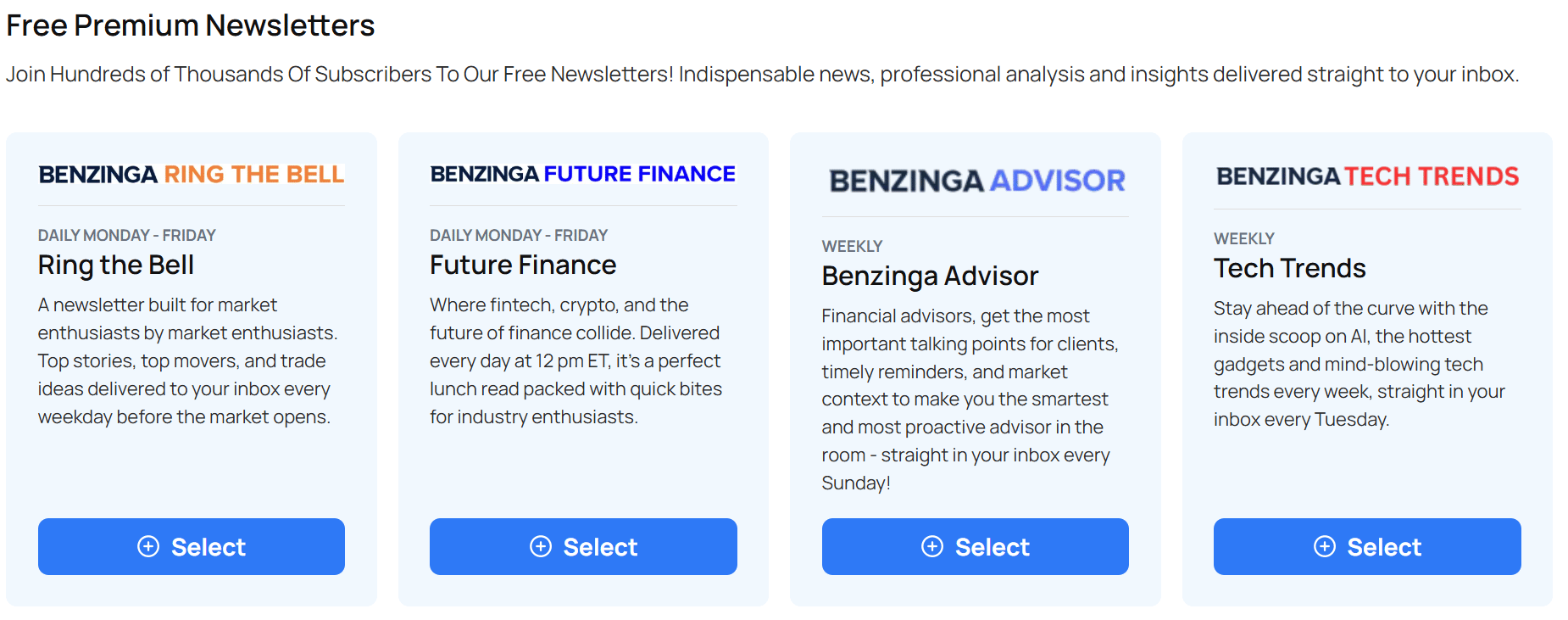
Want more of the news and insights you love? Join hundreds of thousands of readers and explore our other free newsletters for market updates, expert insights, and must-read stories delivered straight to your inbox.
Ring The Bell: Created for market enthusiasts by market enthusiasts, this twice-daily newsletter delivers top stories, fast movers, and hot trade ideas straight to your inbox. Sign up today.
Future Finance: Where fintech, crypto, and the future of finance collide. Future Finance is a perfect lunch read packed with quick bites for industry enthusiasts. Subscribe here.
Tech Trends: Get the inside scoop on AI, the hottest gadgets, and mind-blowing tech trends. Join today.
THE WEEK AHEAD

Economic Data
Monday: No major reports
Tuesday: Homes sales, Wholesale trade
Wednesday: Crude oil inventories, CPI, Treasury balance
Thursday: Personal consumption, PPI, Jobless claims
Friday: Michigan consumer/inflation survey, Total rig count
Earnings
Click here for the full calendar of economic data and earnings reports.
Reminder, if you would like to be featured in our upcoming Advisor Spotlight and showcase your business, click here to send us an email.
BEFORE YOU GO
Were you forwarded this email? Click here to subscribe.
And be sure to check out our other newsletters:
Ring The Bell: Created for market enthusiasts by market enthusiasts, this twice-daily newsletter delivers top stories, fast movers, and hot trade ideas straight to your inbox. Subscribe here.
Future Finance: Where fintech, crypto, and the future of finance collide. Future Finance is a perfect lunch read packed with quick bites for industry enthusiasts. Subscribe here.
Tech Trends: Get the inside scoop on AI, the hottest gadgets, and mind-blowing tech trends. Subscribe here.