- Benzinga Advisor
- Posts
- Fed Report Highlights Consumer Disconnect I Nvidia Earnings On Deck
Fed Report Highlights Consumer Disconnect I Nvidia Earnings On Deck
Plus, the latest in market news.

Happy Sunday, and welcome to Benzinga’s financial advisor newsletter.
Today we're discussing the economy, and how Americans are feeling about it. Despite resilient spending, confidence in the broader economy continues to deteriorate as inflation, job security, and AI reshape consumer anxiety. Read on to see why this growing disconnect matters more you think.
Plus, a look at all the top stories and market activity from this past week.
Advisor Spotlight: If you would like your company to be featured in our upcoming Advisor Spotlight, click here to send us an email.
INDUSTRY CHATTER

For much of the past year, consumers have been sending conflicting messages. They keep spending money, while simultaneously telling surveys they feel pessimistic about the economy. The Federal Reserve’s latest annual household well-being survey helps explain why.
Americans’ views of the national economy have deteriorated, yet many still feel relatively stable about their own finances. The survey — which had more than 13,000 participants — showed that 73% of adults said they were either “doing OK” financially or “living comfortably” in 2025, unchanged from the prior year. Yet, roughly 25% rated the national economy as “good” or “excellent,” down dramatically from pre-pandemic levels.
That disconnect may help explain why consumer spending has remained more resilient than expected despite weak sentiment readings and ongoing economic uncertainty.
At the same time, the survey suggests financial pressure is building, particularly around employment and affordability. Concerns about finding or keeping a job rose to 42%, up from 37% the prior year. Younger households are feeling the strain as well with 15% of adults under 30 reporting that they aren’t working because they can’t find a job. Additionally, half of adults under 30 are living with a parent.
Inflation also remains a defining issue with 9 in 10 adults citing rising prices as a minor financial concern. Among Americans earning less than $50,000 annually, 66% described inflation as a major concern, compared with 42% of households earning more than $100,000.
The survey also highlighted a growing divide around generative AI. Roughly one in four workers reported using AI tools on the job, with adoption heavily concentrated among workers with graduate degrees. Workers already using AI were generally optimistic about its impact on their careers, while non-users were far more concerned about job displacement.
For advisors, the broader takeaway is that many clients may appear financially stable today while still feeling increasingly uneasy about the future. Traditional economic indicators alone may not fully capture client psychology in this environment. Concerns around job security, affordability, and technological disruption are shaping household behavior differently across generations and income levels — making it increasingly important to understand not just how clients are doing financially, but how they feel about what comes next.
WEEKLY MARKET RECAP

The near-vertical AI-driven rally that pushed Wall Street to record highs — one of the fastest and most powerful snapback advances in modern market history — finally collided with a new reality this week: inflation is reaccelerating, and the bond market is beginning to price in the risk of another Federal Reserve rate hike.
April consumer inflation rose to 3.8% year-over-year, the hottest reading since May 2023, as the economic fallout from the Strait of Hormuz blockade continued to ripple through energy and transportation costs.
Producer inflation painted an even uglier picture. The Producer Price Index surged 6% from a year earlier, far above the 4.9% consensus estimate and marking the highest annual reading since December 2022.
Meanwhile, the economy continues to run hot. The Atlanta Fed's GDPNow model is currently tracking second-quarter real GDP growth at 4%, underscoring the resilience of demand despite higher borrowing costs and mounting geopolitical stress.
Bond Market Flashes Higher-For-Longer Concerns
This week’s Trump–Xi summit ended without a concrete agreement, leaving the U.S.–China standoff as a fresh weight on risk sentiment, while the Strait of Hormuz remains closed and a U.S.–Iran breakthrough looks distant — keeping a war-risk premium firmly embedded in oil.
That backdrop now becomes the opening challenge for Kevin Warsh, who was confirmed Wednesday by the Senate in a razor-thin 54-45 vote — the closest Fed Chair confirmation in modern history — to succeed Jerome Powell at the helm of the Federal Reserve.
Warsh's first policy meeting is just one month away, and futures markets now assign a greater-than-50% probability of another rate hike by year-end.
The Treasury market reacted accordingly. The 2-year yield climbed back above the psychologically critical 4% threshold, while the 30-year Treasury yield pushed through 5.10%, signaling growing expectations that rates may stay higher for longer.
Chart of The Week: 2-Year Treasury Yields Jump To March 2025 Highs

Ford Notched Best 2-Day In Six Years On Energy Business Breakthrough
Amid the macro turbulence, the clearest corporate winner of the week was Ford (F).
Ford shares surged 13.2% on Wednesday — their best single-day performance since March 2020 — before adding another 6.7% Thursday after a bullish Morgan Stanley note highlighted the potential value of the company's newly created Ford Energy division.
The unit aims to manufacture U.S.-assembled battery storage systems for utilities, data centers and industrial clients, targeting annual deployments of at least 20 gigawatt-hours, with first deliveries expected in late 2027. Morgan Stanley estimated the business could eventually be worth as much as $10 billion.
But the broader message from markets this week was unmistakable. On Wall Street, the music has not stopped — yet — but the bond market is beginning to rewrite the playlist.
An unstoppable AI-fueled melt-up and resurging inflation are difficult to sustain side by side for long. Eventually, something has to give.
BENZINGA NEWSLETTER SPOTLIGHT
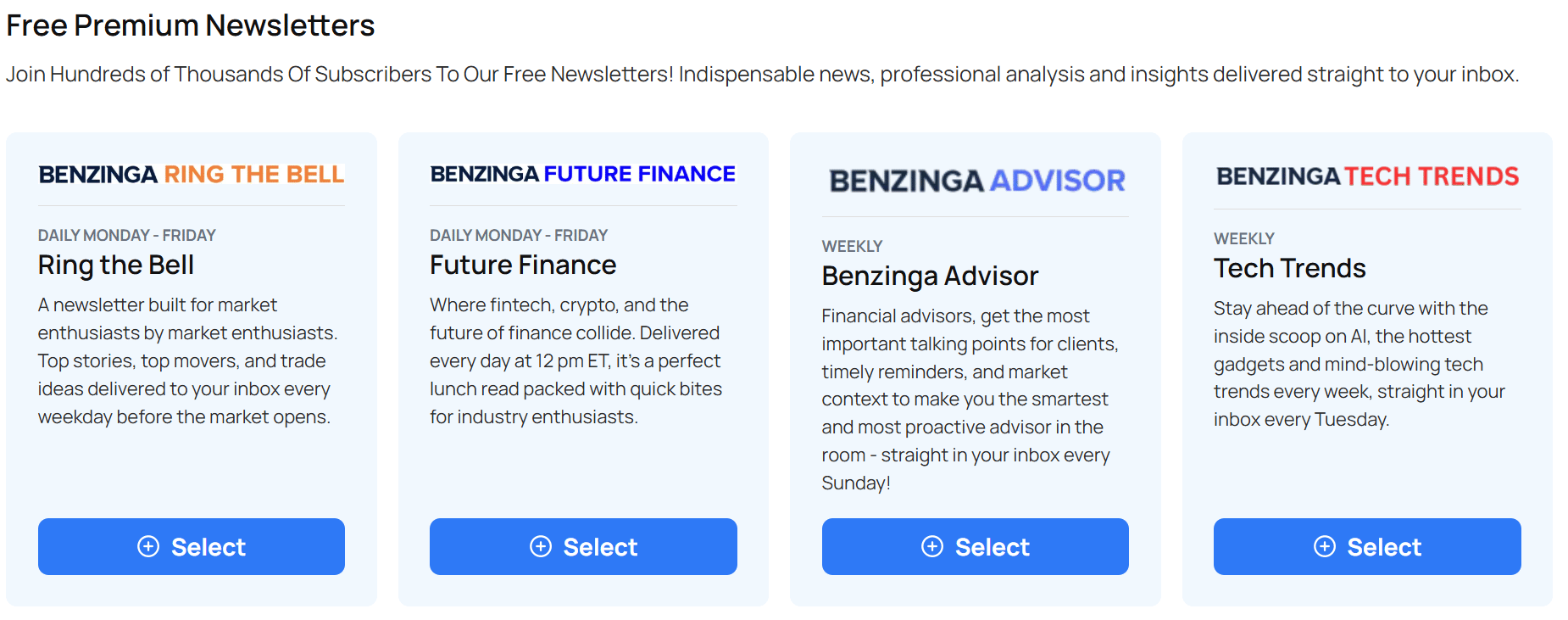
Want more of the news and insights you love? Join hundreds of thousands of readers and explore our other free newsletters for market updates, expert insights, and must-read stories delivered straight to your inbox.
Ring The Bell: Created for market enthusiasts by market enthusiasts, this twice-daily newsletter delivers top stories, fast movers, and hot trade ideas straight to your inbox. Sign up today.
Future Finance: Where fintech, crypto, and the future of finance collide. Future Finance is a perfect lunch read packed with quick bites for industry enthusiasts. Subscribe here.
Tech Trends: Get the inside scoop on AI, the hottest gadgets, and mind-blowing tech trends. Join today.
THE WEEK AHEAD

Economic Data
Monday: No major events
Tuesday: Pending home sales
Wednesday: FOMC May Minutes, Oil inventories
Thursday: Initial jobless claims, Housing starts, Building permits
Friday: Consumer sentiment, Oil rig count, leading indicators
Earnings
Click here for the full calendar of economic data and earnings reports.
Reminder, if you would like to be featured in our upcoming Advisor Spotlight and showcase your business, click here to send us an email.
BEFORE YOU GO
Were you forwarded this email? Click here to subscribe.
And be sure to check out our other newsletters:
Ring The Bell: Created for market enthusiasts by market enthusiasts, this twice-daily newsletter delivers top stories, fast movers, and hot trade ideas straight to your inbox. Subscribe here.
Future Finance: Where fintech, crypto, and the future of finance collide. Future Finance is a perfect lunch read packed with quick bites for industry enthusiasts. Subscribe here.
Tech Trends: Get the inside scoop on AI, the hottest gadgets, and mind-blowing tech trends. Subscribe here.