- Benzinga Advisor
- Posts
- Retirement Analysis: Soaring Balances Extend Rare 3-Year Run
Retirement Analysis: Soaring Balances Extend Rare 3-Year Run
Plus, the latest in market news.


Happy Sunday, and welcome to Benzinga’s financial advisor newsletter.
Today we're discussing retirement savings. According to Fidelity’s Q4 2025 retirement analysis — which has data from nearly 55 million retirement accounts — the average 401(k), 403(b), and IRA balances all hit new record highs. Read on for all the details.
Plus, a look at all the top stories and market activity from this past week.
Advisor Spotlight: If you would like your company to be featured in our upcoming Advisor Spotlight, click here to send us an email.
INDUSTRY CHATTER

If clients are asking about their retirement accounts, there’s a lot of good news that you can share with them.
For the third year in a row, retirement account balances are doing something rare: seeing double-digit annual growth thanks to continued market gains and increased contributions. This is according to Fidelity’s Q4 2025 retirement analysis, which has data from more than 50 million retirement accounts. Overall, the average 401(k), 403(b), and IRA balances hit new record highs.
The average 401(k) balance has steadily increased from $131,700 last year to $146,400 this year, representing a whopping 11% increase year-over-year. IRA’s also saw an increase with gains of 7% year-over-year as balances climbed from $127,534 to $137,095. Last but not least, 403(b) saw the biggest jump as balances soared 13% to go from $117,800 to $133,500.
At first glance, this looks like more of the same: strong markets lifting account values. But that’s only part of the story. Savings rates have now held steady for three consecutive quarters, and Gen X investors — many in their peak earning years — are maintaining savings rates above the 15% threshold that many firms recommend. That’s notable. In prior updates, we saw consistency; now we’re seeing discipline at (or above) target levels from a generation that is getting closer to retirement.
Meanwhile, younger investors continue to reshape how retirement savings look. Millennials and Gen Z are leaning further into Roth IRA contributions, signaling a growing preference for tax diversification and long-term flexibility. Even more interesting: over 13% of Gen Z participants increased their contribution rate in just the last quarter.
For advisors, the same approach as last year still applies. With a lot of volatility last year due to tariffs, the message was largely about staying the course, which many have done. This year is much of the same as volatility — due to the war in Iran — has many people worried about rising inflation and how long oil prices will stay elevated. While the topics might have changed (tariffs vs. war), the overall goal has not for Americans looking to do all they can to beef up their retirement accounts.
Reinforcing good habits, fine-tuning tax strategies, and helping clients understand why what they’re doing well makes a difference. Momentum compounds beyond markets and when clients see balances rise consistently, they’re more likely to increase contributions, adopt new strategies, and stay engaged. Progress fuels participation.
The risk, of course, is complacency. Three years of strong growth can lead clients to overestimate market reliability and underestimate the role their own behavior played.
That’s where advisors can add additional value, by reframing this moment not as a streak of strong markets, but as proof that steady saving, thoughtful allocation, and generational shifts in strategy are working together. Markets may start the momentum, but behavior is what sustains it.
SPONSORED CONTENT

SpaceX (Ticker: SPCX) began trading on the Nasdaq this month. Behind the ticker is the mammoth company that launches most of the world's rockets and runs Starlink, the satellite network with more than 10,000 satellites in orbit.
A stock this big and this new doesn't trade quietly. Now there's a leveraged way to trade it.
Introducing the Direxion Daily SpaceX Bull 2X ETF (LOFF). LOFF seeks 200% of the daily performance of SPCX. It is built for active traders making short-term, daily-objective trades. Held longer than one day, its returns can differ significantly from 2X the underlying stock. Significant Risk Involved.
This is a paid ad. Please read the 17b disclosure here.
WEEKLY MARKET RECAP

April 2026 will go into the books as one of the most extraordinary months in modern Wall Street history.
The Nasdaq 100 closed the month up 15.6% — its best month since 2002. The S&P 500 added 10.5%, its best since November 2020. The iShares Semiconductor ETF (SOXX) surged 40%, marking the best monthly performance in the index’s history.
Intel (INTC) was the poster child of the rally. Shares ended the month up 119% — the best month in the company’s history, nearly double the previous record set in October 1974.
Elsewhere, Advanced Micro Devices (AMD) rose 74% (its best since January 2001), Marvell Technology (MRVL) added 69%, Micron (MU) gained 53%, Alphabet (GOOGL) climbed 33.8% and Amazon (AMZN) rose 27.3% — each posting the strongest month in two decades or more.
A wave of mega-cap tech earnings — all beating estimates and raising AI capex guidance — did the heavy lifting.
Then came Wednesday — the most divided Federal Open Market Committee meeting since 1992.
Governor Stephen Miran called for a 25-basis-point cut, while three regional Fed presidents pushed back against the easing bias in the statement.
Chair Jerome Powell confirmed he will hand over the role to Kevin Warsh on May 15, but will remain on the Federal Reserve’s Board of Governors.
Markets read the message clearly: the Fed is uneasy about inflation, divided on its next move, and unwilling to commit to cuts.
Suddenly, the fear of rate hikes is back on the table.
Thursday delivered the receipts. First-quarter GDP came in below expectations at 2%, held up almost entirely by AI-related capex.
But the Fed’s preferred inflation gauge rose to 3.2%, moving further away from the 2% target.
Iran provided the week’s tail risk. Talks stalled throughout the week, Brent crude oil climbed near $120, then on Friday morning, Tehran routed a fresh proposal through Pakistani mediators, calming oil markets.
The week’s final word came from the factory floor. The April ISM Manufacturing PMI held at 52.7 — matching its highest level since August 2022 — but the prices-paid component surged at the fastest pace since late 2021, driven by oil and diesel costs tied to the Middle East conflict.
The same energy shock that frustrated consumers all spring is now showing up at the factory gate.
On the trading floor, April was a celebration. On the factory floor, it was a warning.
Chart Of The Week: Factory Inflation Is Back — And Consumers Are Next

BENZINGA NEWSLETTER SPOTLIGHT
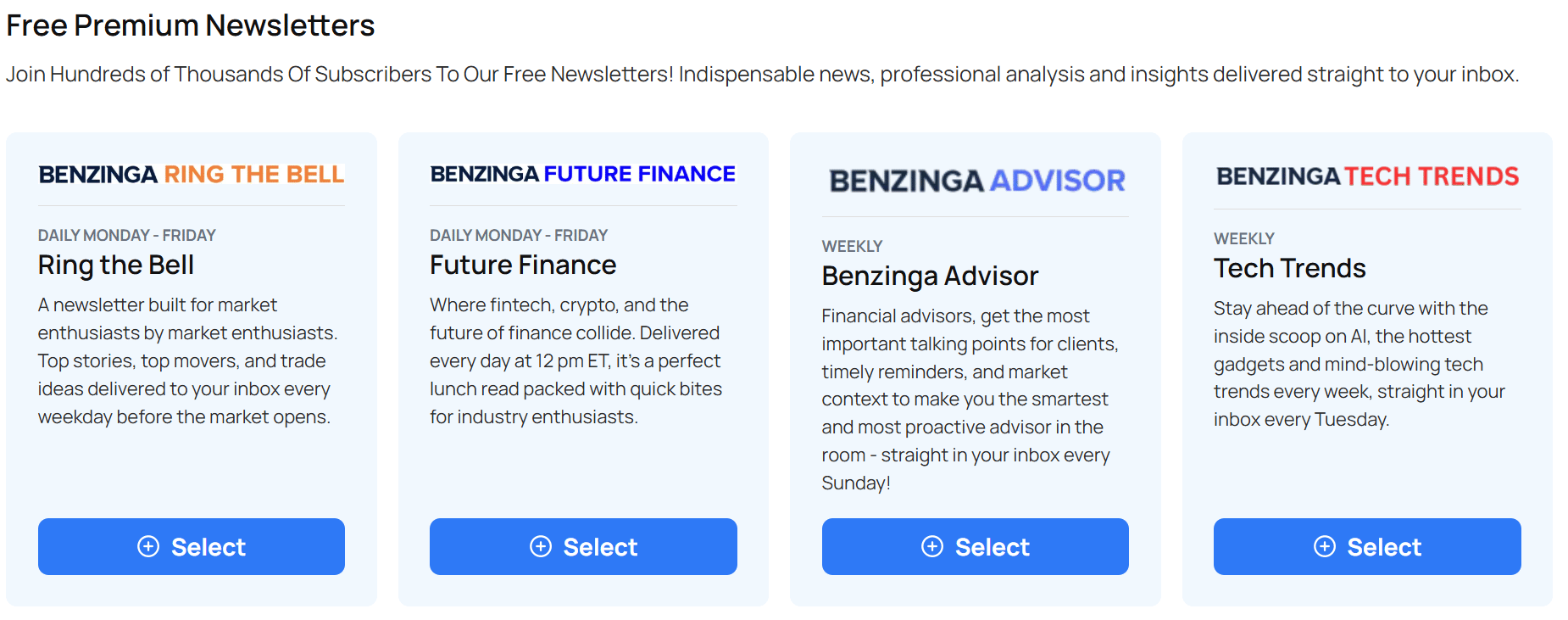
Want more of the news and insights you love? Join hundreds of thousands of readers and explore our other free newsletters for market updates, expert insights, and must-read stories delivered straight to your inbox.
Ring The Bell: Created for market enthusiasts by market enthusiasts, this twice-daily newsletter delivers top stories, fast movers, and hot trade ideas straight to your inbox. Sign up today.
Future Finance: Where fintech, crypto, and the future of finance collide. Future Finance is a perfect lunch read packed with quick bites for industry enthusiasts. Subscribe here.
Tech Trends: Get the inside scoop on AI, the hottest gadgets, and mind-blowing tech trends. Join today.
THE WEEK AHEAD

Economic Data
Monday: Factory orders, Fed speech (John Williams)
Tuesday: Trade balance, Job openings, New home sales, ISM services
Wednesday: ADP employment, Fed Speech (Austan Goolsbee)
Thursday: Jobless claims, Construction spending, Consumer credit
Friday: Employment report, Hourly wages, Oil rig count
Earnings
Monday: Palantir (PLTR), Diamondback Energy (FANG), On Semiconductor (ON), Pinterest (PINS), Norwegian Cruise Line (NCLH)
Tuesday: AMD (AMD), Shopify (SHOP), Pfizer (PFE), Strategy (MSTR)
Wednesday: ARM (ARM), Walt Disney (DIS), Uber (UBER), Applovin (APP), DoorDash (DASH), Warner Bros (WBD)
Thursday: Shell (SHEL), McDonald’s (MCD), Gilead Sciences (GILD), Airbnb (ABNB), MercadoLibre (MELI)
Click here for the full calendar of economic data and earnings reports.
Reminder, if you would like to be featured in our upcoming Advisor Spotlight and showcase your business, click here to send us an email.
BEFORE YOU GO
Were you forwarded this email? Click here to subscribe.
And be sure to check out our other newsletters:
Ring The Bell: Created for market enthusiasts by market enthusiasts, this twice-daily newsletter delivers top stories, fast movers, and hot trade ideas straight to your inbox. Subscribe here.
Future Finance: Where fintech, crypto, and the future of finance collide. Future Finance is a perfect lunch read packed with quick bites for industry enthusiasts. Subscribe here.
Tech Trends: Get the inside scoop on AI, the hottest gadgets, and mind-blowing tech trends. Subscribe here.